
AI Trading Agent: The Future of Automated Financial Markets
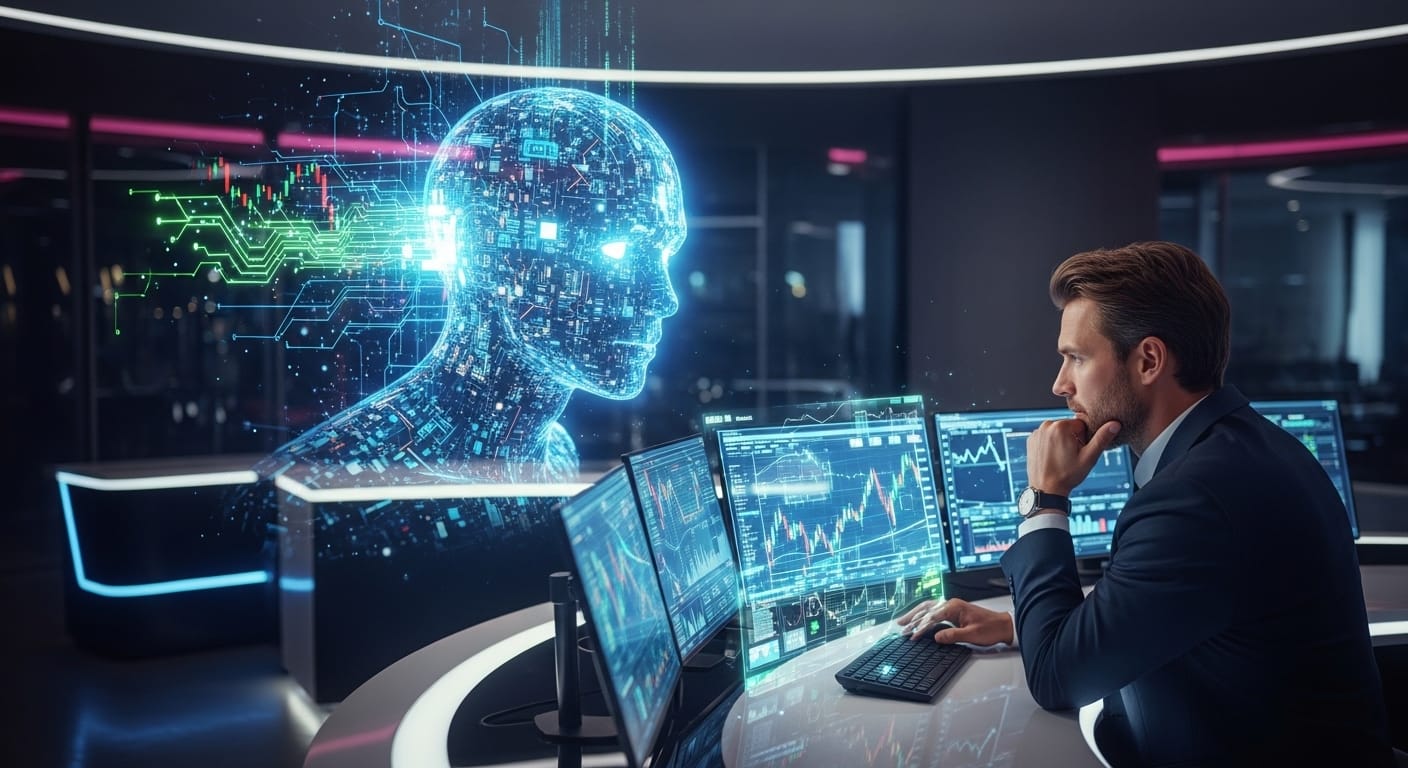
Financial markets have always evolved with technology, but the introduction of artificial intelligence has taken trading to an entirely new level. AI trading agents are transforming how individuals and institutions interact with markets by automating decision-making processes and executing trades with speed and precision. These intelligent systems analyze vast amounts of data in real time, identifying patterns and opportunities that would be difficult for humans to detect. As a result, AI trading is becoming a key component of modern financial strategies.
What Is an AI Trading Agent?
An AI trading agent is a software system powered by artificial intelligence that can analyze market data, make trading decisions, and execute transactions automatically. It operates based on algorithms, machine learning models, and predefined strategies. Unlike traditional trading bots, AI agents can adapt to changing market conditions. They learn from historical data and continuously improve their performance over time. This ability to evolve makes them more efficient and responsive in dynamic market environments.
How AI Trading Agents Work
AI trading agents rely on data-driven analysis to function effectively. They collect information from various sources, including price charts, market news, and trading volumes. Using this data, they identify trends, predict potential price movements, and execute trades accordingly. Machine learning plays a crucial role in this process. The system is trained on historical market data to recognize patterns and optimize strategies. Over time, the agent refines its approach, improving accuracy and decision-making.
Automation allows these agents to operate 24/7, ensuring that no trading opportunity is missed, even when human traders are inactive.
Advantages of AI Trading in Financial Markets
One of the biggest advantages of AI trading agents is speed. They can process and analyze data in milliseconds, enabling them to react instantly to market changes. This speed provides a significant edge in highly competitive environments.
Another benefit is accuracy. By relying on data rather than emotions, AI agents reduce the risk of impulsive decisions that can lead to losses. They follow predefined strategies consistently, ensuring disciplined trading. AI trading also improves efficiency. It eliminates the need for constant monitoring, allowing traders to focus on strategy and long-term planning rather than day-to-day execution.
The Role of Automation in Modern Trading
Automation is at the core of AI trading agents. It simplifies complex processes and allows trades to be executed without manual intervention. This is particularly valuable in markets that operate around the clock, such as cryptocurrency trading.
With automation, traders can set parameters and let the system handle execution. This not only saves time but also ensures consistency in trading strategies. Automation also enables scalability. Traders can manage multiple assets and strategies simultaneously without increasing workload.
Challenges and Considerations
While AI trading agents offer many benefits, they are not without challenges. Market conditions can be unpredictable, and no system can guarantee profits. AI models depend heavily on the quality of data and the accuracy of their training.
There is also the risk of over-optimization, where a model performs well on historical data but struggles in real-time markets. Continuous monitoring and adjustment are necessary to maintain performance. Security and reliability are also important factors. Ensuring that the system operates safely and protects sensitive data is essential for long-term success.
The Future of AI in Financial Markets
The future of AI trading agents looks promising as technology continues to advance. With improvements in machine learning, data processing, and predictive analytics, these systems are expected to become even more sophisticated.
AI is likely to play a larger role in shaping financial markets, from individual trading strategies to institutional investment decisions. As adoption grows, traders who leverage AI tools may gain a competitive advantage.
At the same time, regulatory frameworks may evolve to address the increasing use of automation in trading, ensuring transparency and fairness in the market.
Conclusion
AI trading agents represent the future of automated financial markets by combining intelligence, speed, and efficiency. They offer a powerful way to analyze data, execute trades, and optimize strategies with minimal manual effort. While challenges remain, the potential benefits make AI trading an important tool for modern investors. As technology continues to evolve, these systems will play an even greater role in transforming how financial markets operate.

Created with © systeme.io